Most people walk the Delaware beaches looking for shells, sea glass or the perfect sunrise. I find myself looking at the sand not because I’m searching for treasure, but because I’m curious. Everywhere I go, whether I’m hiking through the woods, walking the shoreline, exploring a park or standing in my own backyard, I can’t help but notice the edible world around me. It’s something I’ve done ever since I was a boy.
I often think about wild and cultivated ingredients the way a painter thinks about paint. Every plant, herb and flower is another color on the palette, another tool for creation. Every season offers a different collection of flavors. Nature is constantly changing, and that’s what keeps cooking with the seasons exciting.
But curiosity has to come with responsibility. The first rule of foraging is surprisingly simple:
Do no harm.
I borrow that philosophy from medicine because I think it applies just as much to nature as it does to people. The goal isn’t to see how much you can collect. The goal is to leave the landscape looking as though you were never there.
When I forage, I never harvest an entire patch. I rarely take more than 10 percent of what’s available, and I always harvest from areas where there is abundance. I leave the first plants I see and continue walking before I consider picking anything. That way, I’m never taking from the only population I happen to find.
I never pull up an entire plant unless harvesting the root is the specific purpose, and that’s rarely the case. Instead, I harvest the tender tops, leaving the root system intact. Healthy roots continue to anchor the sand, gather nutrients, and send out new growth. In many cases, the plant responds by branching and producing even more foliage.
I’m also careful about something many people never think about.
Where you step matters just as much as what you pick.
Walking carelessly through the dunes can crush young plants before you even notice they’re there. The most sustainable foragers move carefully, taking only what they need while protecting everything around them.
As important as protecting nature is, knowing the laws that govern harvesting is equally important. Some coastal habitats are protected, and for good reason. Dunes are living ecosystems that defend our shoreline against erosion and storms. I encourage people to make friends with landowners, ask permission, and forage only where it’s legal and appropriate. Respect for the landscape starts with respecting the rules that protect it.
Of course, before you pick anything, you need to know exactly what you’re looking at.
There are wonderful field guides dedicated to edible coastal plants, and they’re worth every penny. Learning plant identification is part of the adventure. Guessing isn’t. If you aren’t 100 percent certain what a plant is, leave it exactly where you found it.
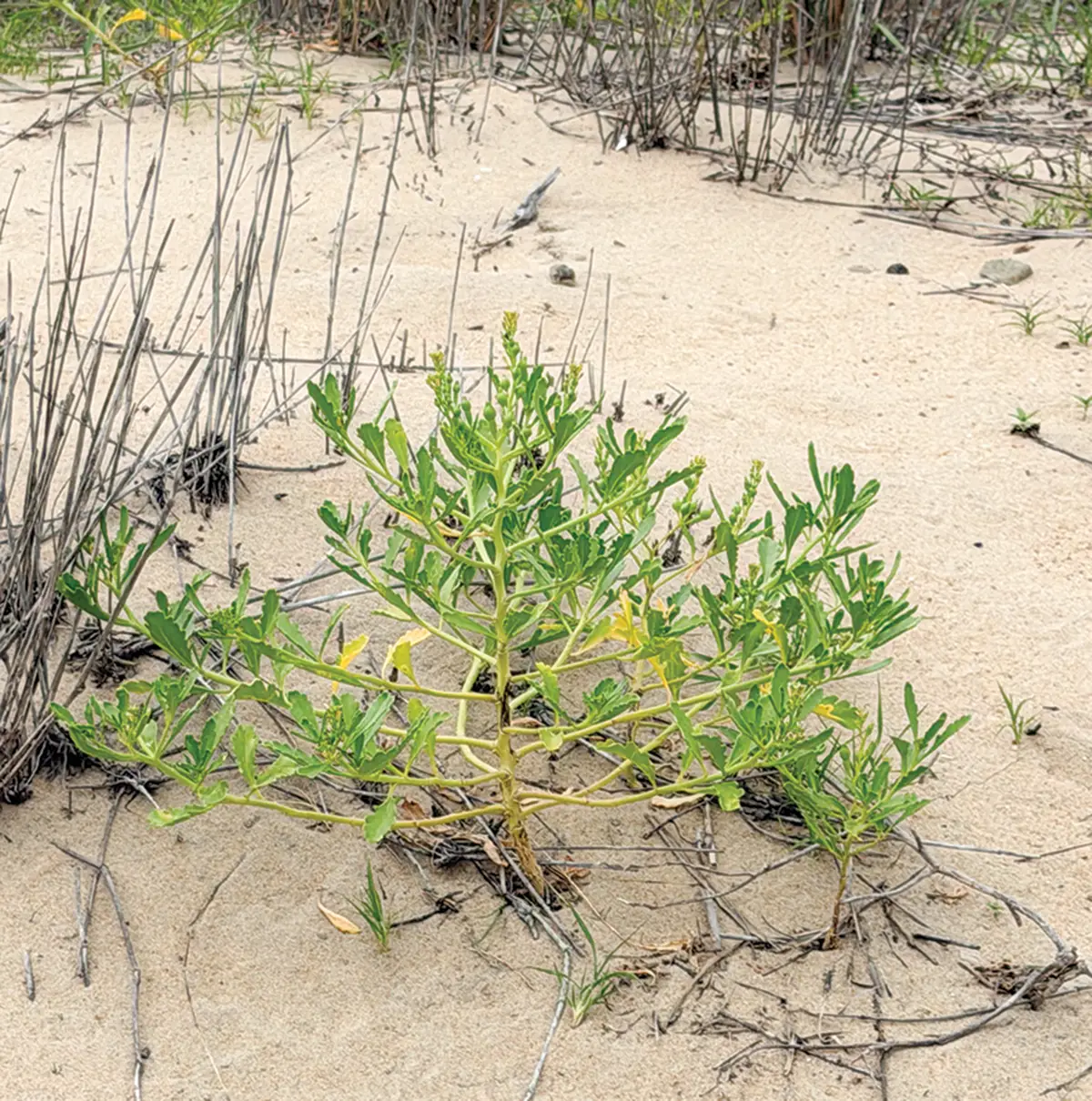
One of my favorite discoveries along the Delaware coast is sea rocket.
Most people walk right past it without giving it a second glance. Growing in the sand with fleshy green leaves, delicate flowers and curious little seed pods, it doesn’t immediately announce itself as something edible. But once you taste it, you understand why it has captured my imagination.
Sea rocket belongs to the mustard family, making it a distant cousin of radishes and arugula. The leaves have a fresh, peppery bite that reminds me of wild arugula, while the young seed pods have an incredible crunch and bursts of salinity. Even the flowers are edible, adding both beauty and a gentle spice.
It tastes exactly like where it grows.
That’s something I love about wild ingredients. They aren’t trying to taste like something else. Sea rocket tastes of wind, salt air and summer. It’s a reminder that flavor can tell the story of a place just as clearly as a photograph.
The Delaware coast is full of ingredients hiding in plain sight. Sea beans grow in the marshes. Beach plums ripen in late summer. Edible seaweeds have sustained coastal cultures for centuries. Every season offers something different if you’re willing to pay attention.
Foraging, though, isn’t something I do every weekend simply because I can. In many ways, I enjoy observing as much as harvesting. Sometimes I’ll find a beautiful patch of sea rocket, admire it for a few minutes and leave without taking a single leaf.
It isn’t always about filling your basket. It’s about appreciating nature and changing the way we see it.
Once you begin recognizing edible plants, every walk becomes a conversation with nature. The beach becomes a living pantry filled with ingredients, stories and possibilities.
Sometimes those possibilities stay exactly where they belong. And sometimes they inspire a dish that captures an entire season on a single plate.
Next week, I’ll share one of those dishes: a simple composition of the Atlantic coastline.