I think summertime is one of the easiest and most satisfying times of the year to cook. There is so much energy in vegetables after long days, warm soil and summer sun. Tomatoes actually taste like tomatoes. Peppers are crisp and sweet. Herbs grow faster than you can use them. Squash blossoms open. Basil flowers. Everything feels alive.
When ingredients are this good, my feeling is that we should do less to them, not more.
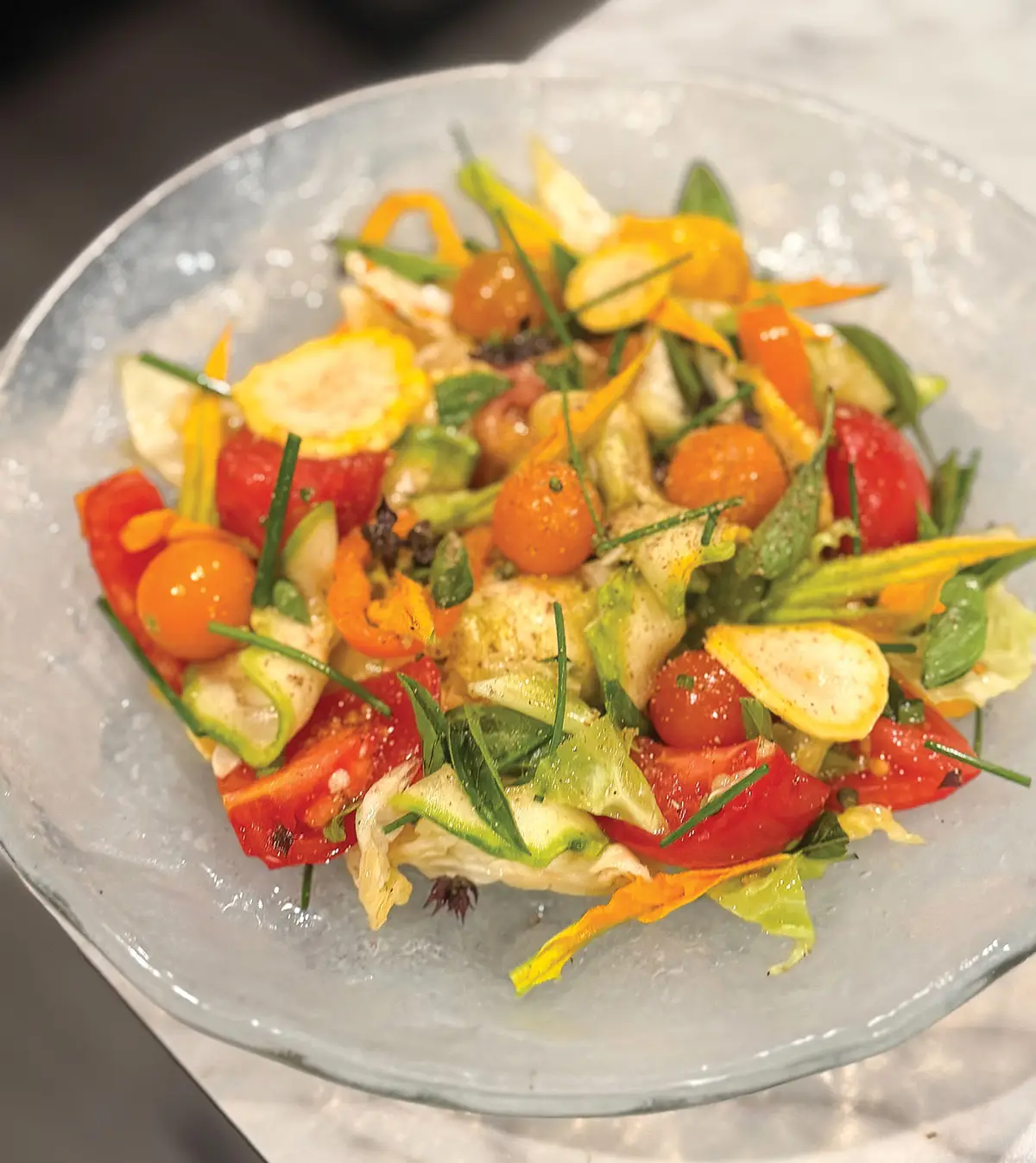
The other day, I went into the garden and gathered what was ready: Napa cabbage, ripe tomatoes, summer squash, peppers, squash blossoms, chives and Thai basil. I shaved and sliced everything thinly, served it raw and dressed it with lemon juice, sherry vinegar and a really nice extra-virgin olive oil.
That was about it.
After the vegetables sat in the dressing, the acid and salt softened them just enough. The cabbage relaxed. The shaved squash became almost velvety while retaining plenty of crunch. The tomatoes released some of their juice into the dressing, and the herbs brought freshness and perfume. It became a wonderful harmony of flavors and textures: crunchy, juicy, tender, acidic and herbaceous. It was a feast for the eyes, too.
I served it with marinated grilled chicken breast and grilled peppers. It was a simple meal, but everybody enjoyed it, and that is one of the things I find most satisfying about cooking.
To me, treating a vegetable with respect means allowing it to be itself. Maybe you cook it slightly. Maybe you shave it thinly, season it, dress it or grill it. You’re doing just enough to highlight its best qualities without masking what made it delicious in the first place. Summer is the perfect time to cook this way.
Take a tomato. For much of the year, we eat tomatoes picked before they are ripe and shipped long distances. They might look like tomatoes, but too often they taste like cardboard. Then summer arrives, and you eat one allowed to ripen in the sun. It is juicy, acidic, sweet and vibrant. Why would you want to cover that up?
This is also why I love using as much of the plant as I can. Squash and cucumber blossoms are delicious. When basil produces buds and flowers, I use those, too. They have their own flavor and fragrance and look beautiful scattered over a finished dish.
I never put a flower on a plate simply because it is pretty. If it’s going to be on the dish, I want it to taste good. In summer, blossoms, buds and tender leaves can add flavor as well as beauty. They belong on the plate because they’re delicious.
There is something satisfying about using what a plant gives you. You may have planted it, tended it and watched it grow. Or maybe someone else did that work, and you found the vegetables at a farmers market or grocery store. Either way, someone put care into growing that food. I think the cook’s responsibility is to carry that care forward.
You certainly don’t need a garden to cook this way. Visit a farmers market or farm stand. Look carefully at what is in the grocery store. Ask what looks best right now instead of deciding what to make before seeing the ingredients. Buy the best ingredients you can and don’t overcomplicate them.
There is another practical benefit: When it is hot outside, who wants to make the kitchen even hotter? Summer cooking can mean chopping vegetables, making salads, marinating and cooking outside on the grill. A little acid, good olive oil, salt, fresh herbs and something off the grill can create an incredibly satisfying meal without running the oven for hours.
More than anything, summer cooking should have some joy in it. There is joy in walking into a garden and seeing what is ready. There is joy in finding a tomato at the farmers market that smells like a tomato before you’ve cut into it. There is joy in placing a platter of beautiful vegetables on the table and watching your friends and family dig in. Even the boys will eat it when it tastes that good.
That’s really my argument for cooking in summer: Don’t fight the heat or the season. Let the sun, the farmer and the garden do some of the work for you.
Find the freshest vegetables you can. Use the leaves, blossoms and buds when they’re delicious. Add just enough acid, salt and good olive oil to bring everything together. Apply heat where it helps and leave things alone where it doesn’t.
Then put it on the table and share it with people you love. Sometimes respecting an ingredient means having the confidence to let it taste like itself.