Every so often, a dish shows up that’s not really about the plate in front of you. It’s about a moment you don’t want to lose.
That’s really what cooking is for me. Not just feeding people, but trying to hold onto something that’s already slipping away. This is almost like a part two of the sea rocket story I wrote a few weeks ago.
As chefs, we chase the seasons. That’s one of our main jobs. You wait all year for asparagus and ramps to show up in the spring, only for them to disappear at the perfect time, when you’re picking tomatoes or getting them from someone who has. All of that waiting makes us pay attention to the beauty of the products.
This dish started with a walk through the dunes.
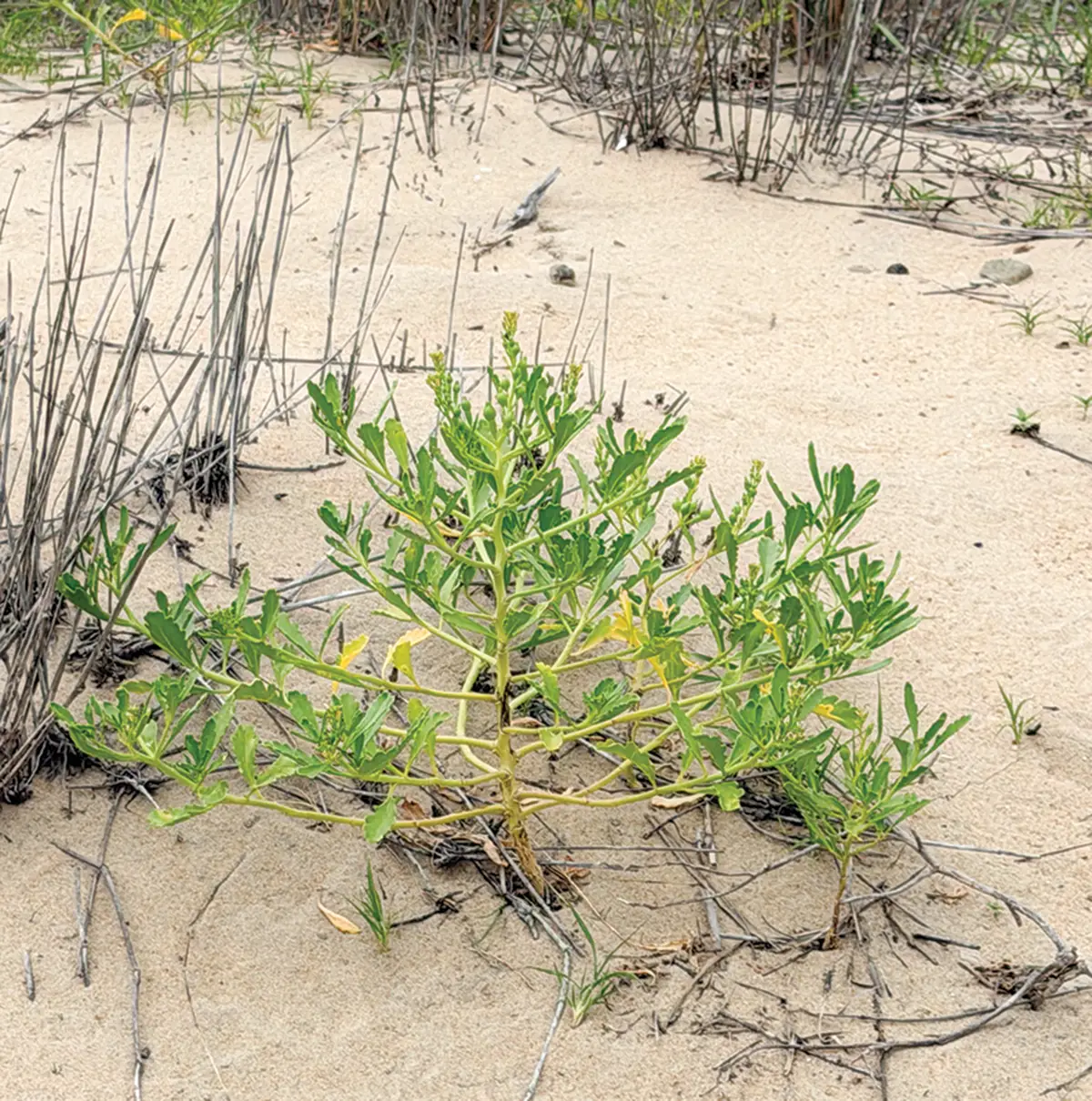
I had been spending time along the Delaware coast, looking closer at what grows there. Sea rocket kept stopping me in my tracks: peppery, a little wild, kind of stubborn in the best way. The leaves, seed pods and flowers all tasted like the place they came from. No disguise. No pretending.
I remember thinking, I don’t want to mess with this. I want to let it be what it is.
So I built around that.
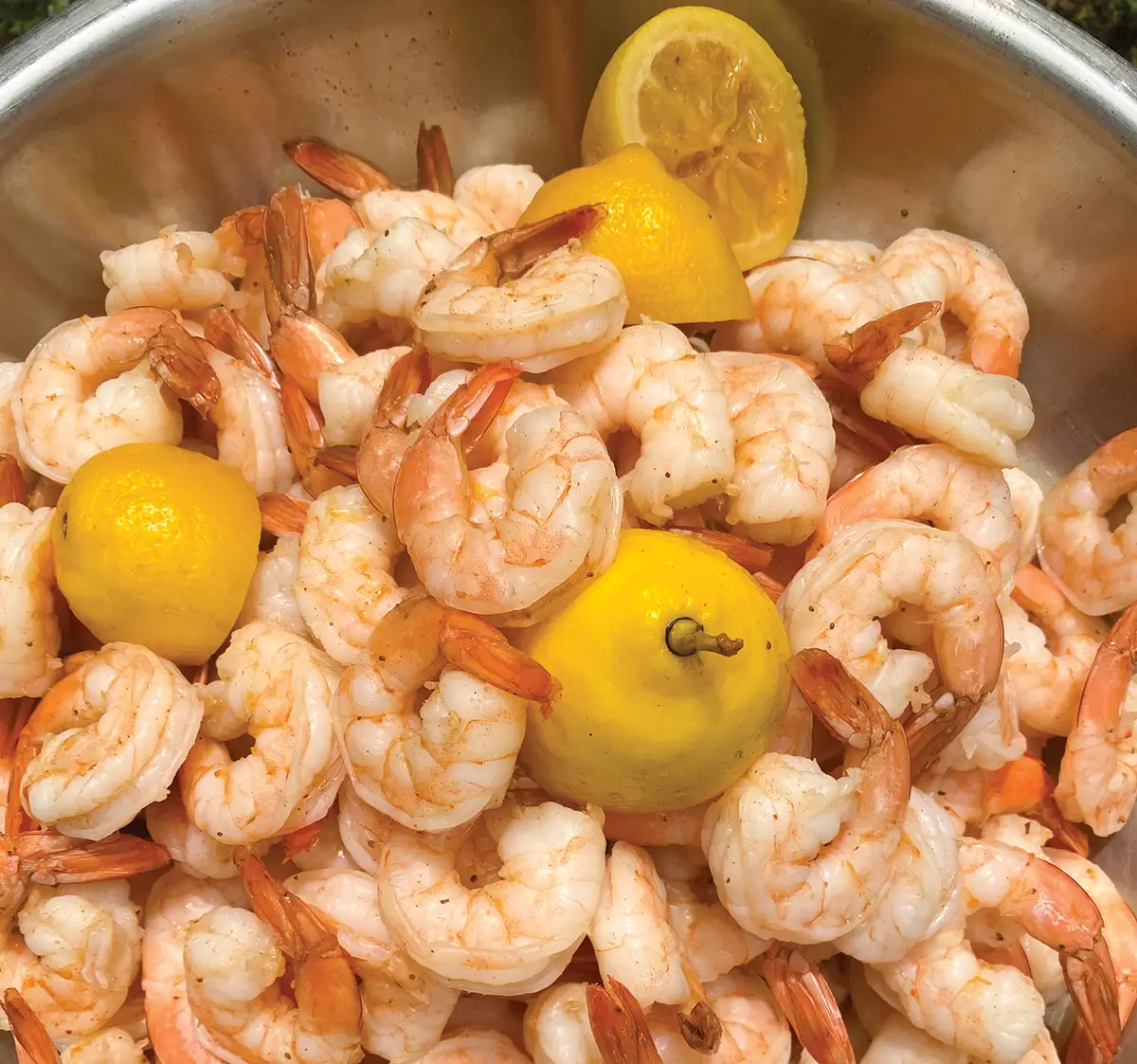
The shrimp are the anchor. Atlantic shrimp, gently poached. Nothing aggressive. They’re cooked in a light court bouillon that sits somewhere between dashi and a classic French stock, with a little seaweed to remind you where you are. The goal was never complexity. It was restraint.
Fermented garlic, something I learned to appreciate from my friend Toby Gilbert, becomes the base of the aioli. It loses its sharp edges without losing its soul, adding depth without taking over.
The sea rocket shows up in a few different ways. The leaves become a bright pistou, the seed pods stay whole for little pops of crunch and salt, and the flowers go on at the end as a reminder that this was alive in the sand not long ago.
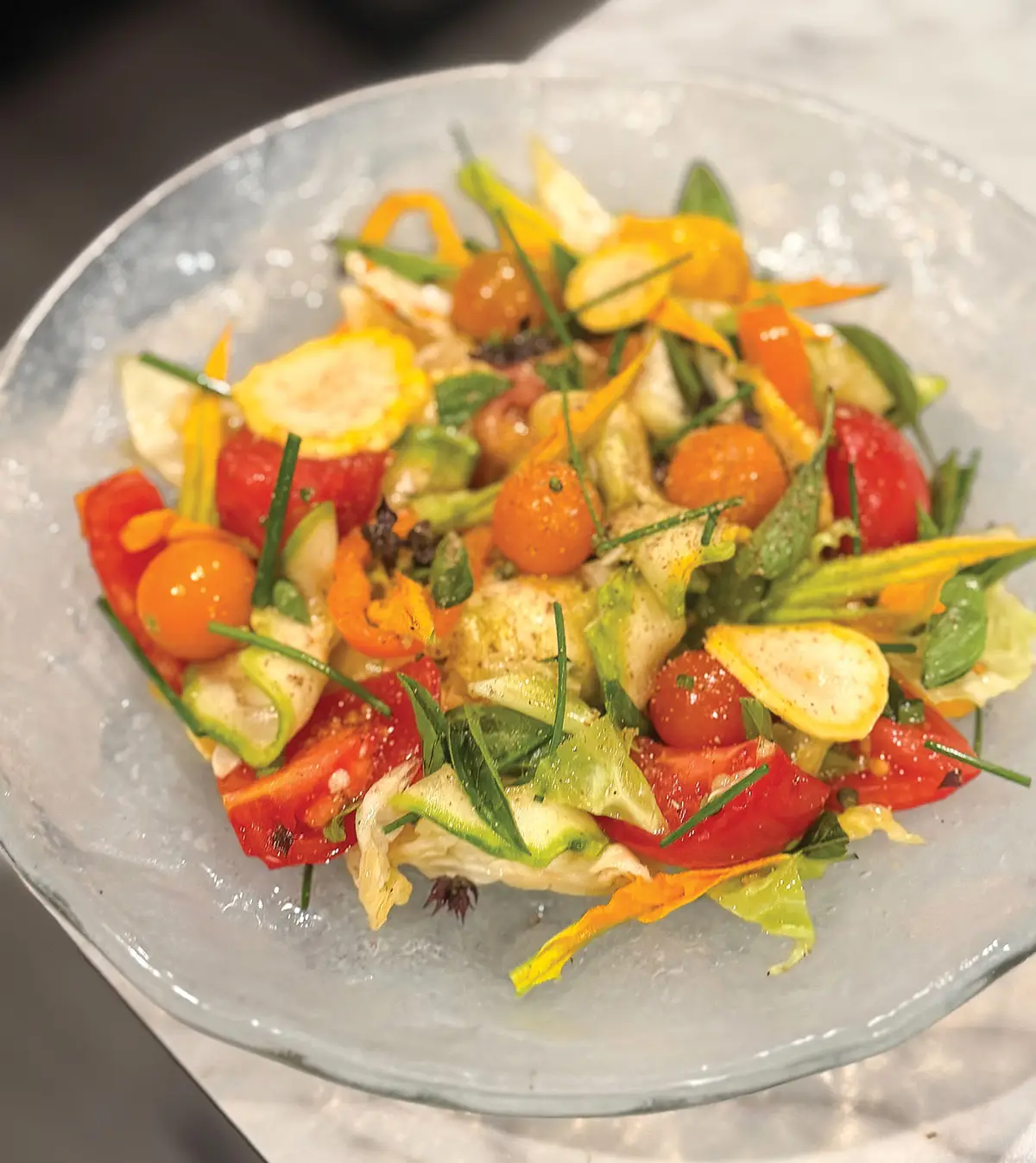
Squash blossoms bring a gentle sweetness that softens the sharper coastal flavors, while Thai basil from my garden adds a beautiful licorice note that helps bridge the gap between land and sea. And then there’s lemon, which honestly keeps everything honest.
When it all comes together, it stops feeling like separate ingredients. It becomes a place. The coast, the garden, the dunes and the water, all sitting on the same plate for a moment.
That’s what I’m always chasing. Not perfection. Not technique for its own sake. Just that feeling where everything makes sense together without trying too hard.
I’ve learned over the years … the more you add, the less you usually hear.
This isn’t a Tuesday night dinner kind of dish. It’s the kind of thing you make when people are actually sitting with you, when the conversation matters as much as the food. When the light is going down over the marsh, and nobody is in a rush to leave.
The plate becomes part of the table, not the center of it.
In a way, it’s just a snapshot of summer, of a coastline I care about, of a garden that keeps changing while I’m not looking.
And that’s the thing about cooking like this … it never really lasts. The sea rocket won’t taste the same next week. The squash blossoms are already gone before you know it. The herbs shift with the weather. The ocean never repeats itself.
But that’s also the point.
Food is one of the few ways we get to hold onto something that’s already moving.
And long after the plate is gone, I hope what stays isn’t the list of ingredients, but the memory of it. The pepper of the sea rocket. The sweetness of the shrimp. The depth of the garlic. The brightness of the lemon. The softness of the blossoms. The smell of basil in the air.
But more than anything … just the feeling of being there.
Because the best dishes I’ve ever had, or cooked, aren’t remembered for what was in them.
They’re remembered for what they meant in that moment.
And if this one means anything at all, I hope it’s simple:
The Delaware coast isn’t just something you look at. It’s something you taste. And once you do, it stays with you.