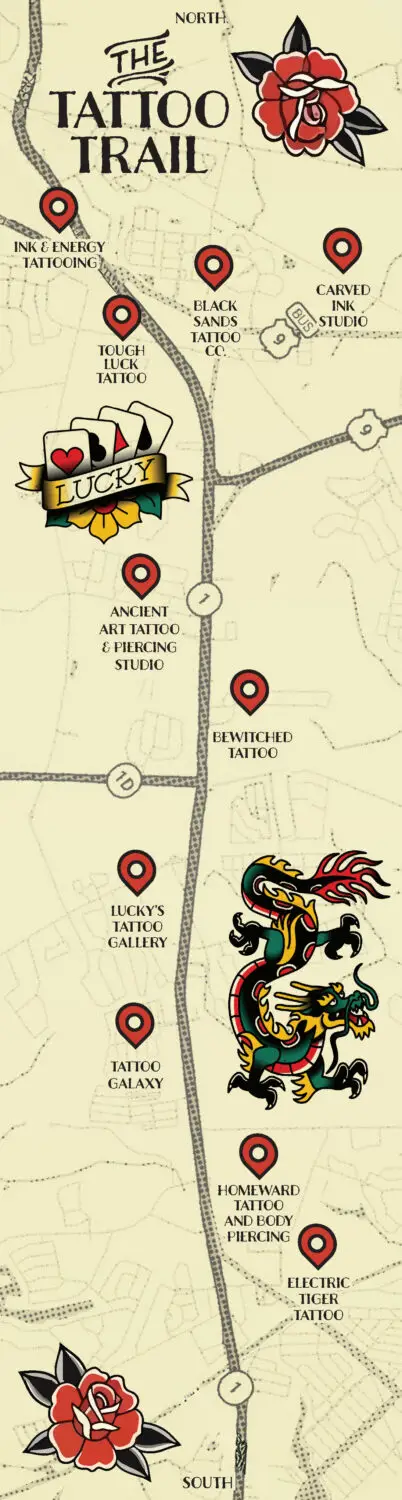
Drive Route 1 through the Delaware beaches and eventually you start noticing them.
Tattoo shops.
Not one tucked away somewhere, but enough of them that the concentration feels surprising for a place where the year-round population is relatively small. They sit among the restaurants, breweries, surf shops and other businesses built to serve a region that becomes a very different place every summer.
The obvious explanation is tourism. People come on vacation and often decide to commemorate the experience with a tattoo.
But talk to the artists working here and a more interesting explanation emerges.
The tattoo shops around the Delaware beaches aren’t simply feeding a tourist appetite for body art. They exist where three larger forces have collided: tattoos have become radically more mainstream, coastal Delaware has become busier and more populated and the modern vacation has increasingly become about collecting experiences rather than things.
In that economy, a tattoo may be the ultimate souvenir.
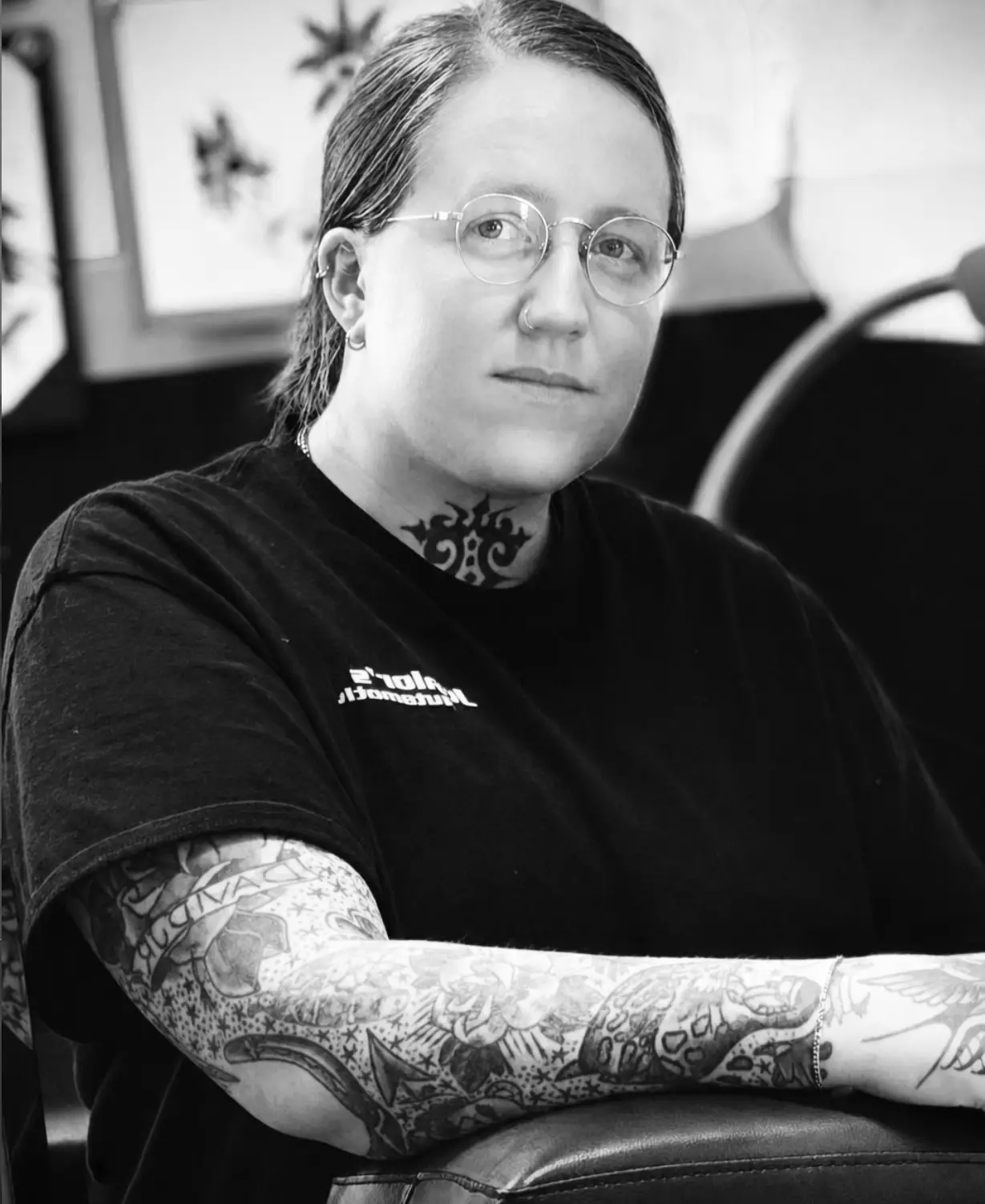
“When people are on vacation, I think that they like to take something home with them, other than just being at the beach,” said Mollee Marston of Electric Tiger Tattoo. “Getting a tattoo, is almost a time capsule. Like this is where we got this tattoo, at this date, this time, when we were at the beach.”
Marston sees plenty of evidence of it during the summer. There are bachelorette groups coming in together. Families and friends getting matching pieces. Vacationers choosing small reminders of where they spent the week.
“They’ll come in and they want a tattoo, and it’s the experience,” she said. “It’s the experience, the souvenir.”
The designs themselves can be predictably coastal.
“Waves. Probably waves,” said Desmond Mitchell of Electric Tiger. “A lot of seashells, seahorses, sharks. Do a lot of sharks.”
Then there are the souvenirs nobody planned on getting.
“Everybody’s been getting stung by jellyfish and then getting jellyfish tattoos, within the past two or three weeks,” Mitchell said. “I did one two days ago, and then Adam did like four last week.”
Getting stung by a jellyfish and responding by permanently tattooing a jellyfish onto your body sounds absurd until you consider what a vacation tattoo actually does. It turns an experience, including a painful, ridiculous one, into part of the mythology of the trip.
The same impulse that makes people save concert wristbands, frame ticket stubs or buy a T-shirt from a place they may never visit again is operating here. Tattooing just takes the logic further.
And increasingly, there are a lot more people willing to do it.
“There’s more people getting tattoos than there ever has been, for sure,” Mitchell said. “Definitely in town here. There’s more people that have moved here too. So that’s why there’s been an influx of shops.”
He has watched the transformation happen alongside the transformation of the beach itself.
“Traffic’s at an all-time high too,” Mitchell said. “It gets worse every year, and it does make us busier in the summertime, which is cool.”
But blaming the proliferation of shops entirely on beach traffic misses an even bigger shift.
Tattooing changed.
For much of the 20th century, a tattoo could say something about the kind of person you were, or at least about the kind of person society assumed you were. Tattoos carried associations with sailors, bikers, soldiers, rebellion and subculture. Visible tattoos could affect where someone worked, how they were perceived and how much of themselves they felt comfortable showing.
Kris Dilworth of Tough Luck Tattoo entered the industry when that world was still very much intact.
“I came into this job with the stigmas,” Dilworth said.
He remembers when becoming a tattoo artist itself required access to a fairly closed culture.
When Dilworth was trying to find an apprenticeship in Philadelphia in the early 2000s, “it was very closed door,” he said. “You got to know somebody. You got to know someone to get in there.”
Tattoo equipment wasn’t something an aspiring artist could simply order online.
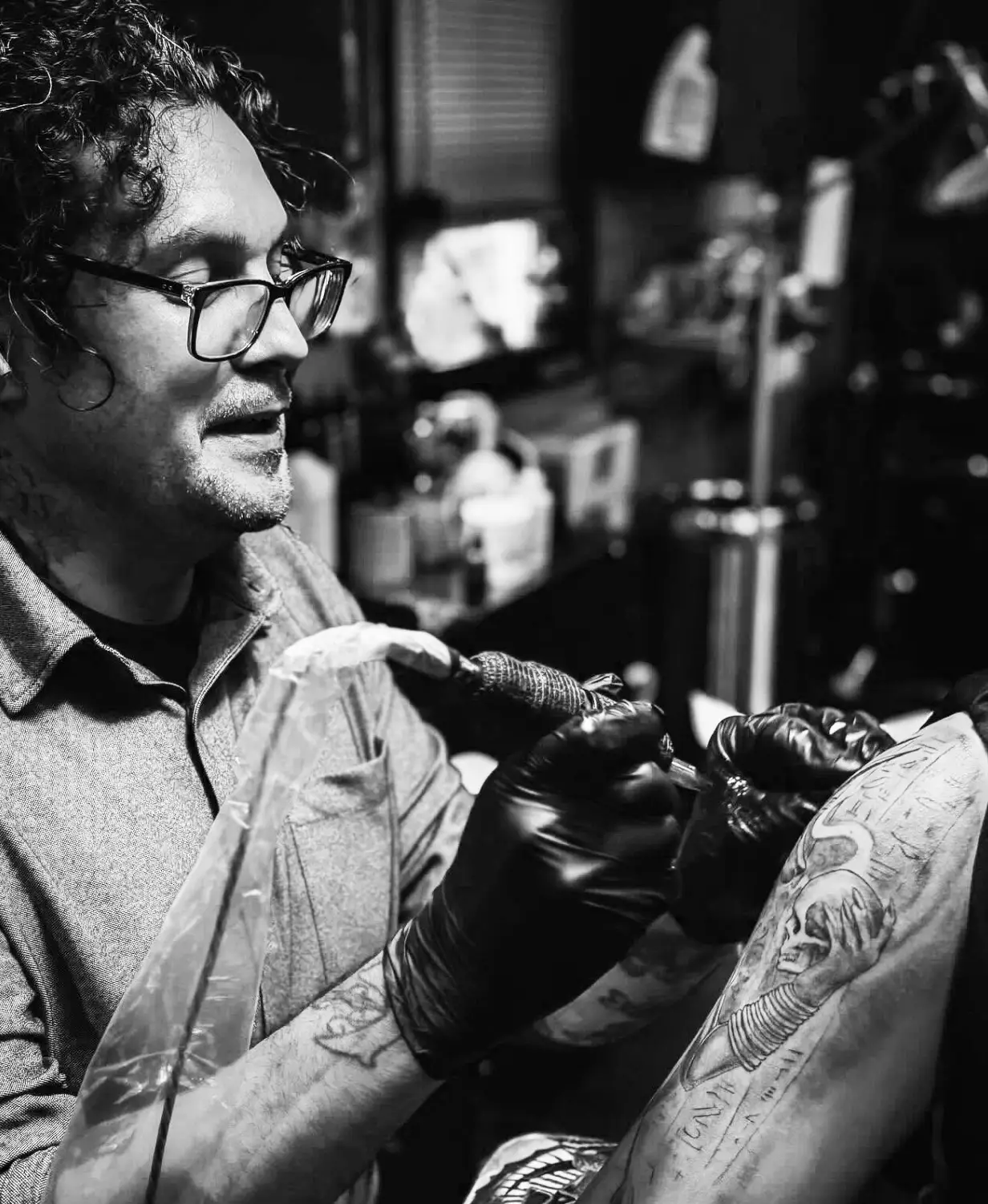
“Back then you couldn’t go on Amazon and just buy a tattoo machine,” Dilworth said. “You had to get an apprenticeship. You had to know somebody that tattooed.”
That gatekeeping had obvious drawbacks, but Dilworth argues that the apprenticeship model also passed along something important: technique, safety, experience and respect for the craft.
“There’s a lot of things that you got to know before you start doing this job,” he said. “To do it well.”
Today the barrier between tattoo culture and everybody else has largely collapsed.
That has expanded the customer base enormously, but it has also changed what getting tattooed means.
“On the bottom level, it’s a sign of independence and individuality, and it’s a rite of passage for some people,” Dilworth said. “And then it’s like rebellion.”
Except rebellion gets complicated once everybody is doing it.
“If it’s easily accessible, then it’s not really rebellion,” he said.
That may be one of the reasons tattooing fits the modern beach economy so well.
The tattoo hasn’t lost its ability to feel personal, but it no longer requires someone to identify with a particular subculture. A teacher can get one. A banker can get one. A bride and her wedding party can get matching ones between brunch and happy hour.
The act kept the individuality while shedding much of the social cost.
Marston sees that shift too, particularly among younger clients. Tattooing, she said, has “become much more popular with young people, like than it ever used to be.”
In coastal Delaware, all of that demand is compressed into a narrow strip of communities filled with visitors who arrived specifically to have a good time.
But Fred Giovannitti, owner of Ink & Energy Tattooing, questions the premise that there are actually an extraordinary number of shops here in the first place.
Historically, he said, communities surrounding military installations were far more likely to develop dense tattoo scenes. He points to places such as Dover as examples.
What coastal Delaware does have, he believes, is something else.
“Nice areas like we have here attract artisans and crafty people,” Giovannitti said.
To him, asking why the Cape Region has tattoo artists isn’t so different from asking why it has so many painters, woodworkers, makers and other creative small-business owners.
“The place attracts artists,” he said.
Tattooing happens to offer something many other art forms don’t: a relatively direct path between making art and making a living.
“Tattooing is a lot like that,” Giovannitti said. “It’s an avenue for artists to express themselves individually, one on one with people.”
And the artists willing to turn that ability into a business become part entrepreneur too.
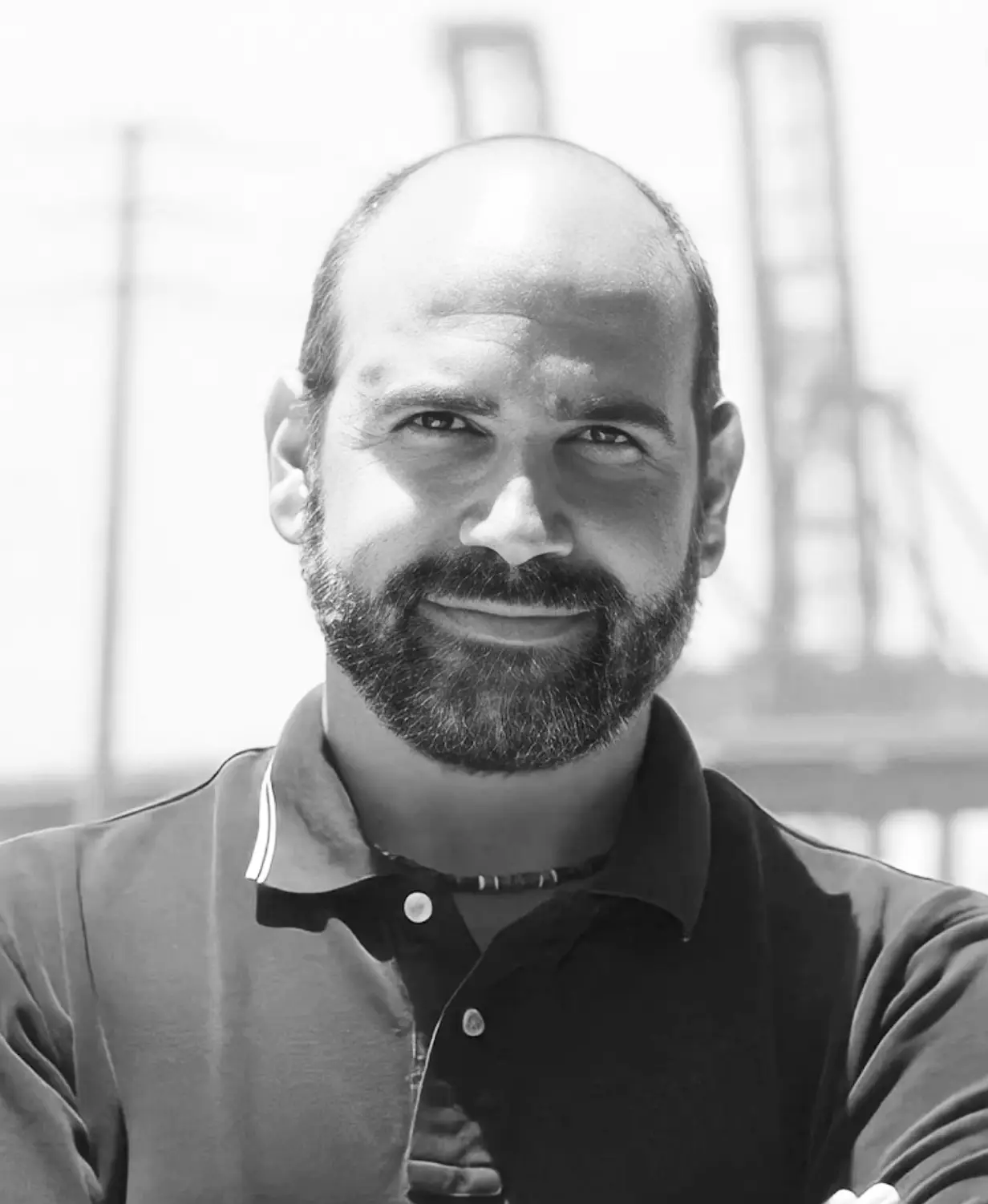
“Some artists do it on their own time, and some artists are entrepreneurs,” he said.
Giovannitti knows the pattern well. His first tattoo studio was in Turkey, where he tattooed Air Force personnel. He later operated shops in Las Vegas before moving to Delaware and eventually establishing his business here.
His career traces tattooing through several of the environments where it has historically flourished: the military, a city built around entertainment and, finally, a coastal resort community. They seem like very different places.
But all three are filled with people passing through, marking transitions and looking for ways to make an experience permanent.
That may ultimately explain the tattoo shops of coastal Delaware better than population statistics ever could.
This is a region built around memory-making.
People get engaged here. They celebrate birthdays here. They bring their children back to the same beach their parents brought them to. They rent the same houses, eat at the same restaurants and take the same photos beside the same landmarks summer after summer.
The tattoo shop fits naturally into that ecosystem, giving people a way to turn a moment, milestone or memory into something permanent.
A wave can mean the summer someone graduated. A tiny shell can mark a sisters’ weekend. Matching tattoos can freeze a family trip in time. Even a jellyfish can become shorthand for the week everybody still talks about years later.
Maybe the remarkable thing isn’t just that a coastal vacation town has so many tattoo shops.
It’s that they exist within a broader ecosystem shaped by seasonal tourism, artists who move here and build long-term careers, and a community that supports and values their work.
Yes, people come here on vacation and get tattooed. But the same coastline that draws tourists also draws tattooers, painters, designers, and other creative workers who are looking for a place where their work can actually sustain a life. The shops exist not just because people are passing through, but because people are putting down roots and choosing to make art here.
The surf shop sells you the board. The restaurant gives you the dinner. The brewery pours the beer.
And the tattoo shop sits somewhere in between: serving the people who are here for a week, and the artists who are here for good, both contributing to the same evolving story of the place.